
Andy Marshall PGA Professional’s Top 10 Courses in Ayrshire

Ayr Belleisle Golf Course – opened in 1927 this classic parkland course works its way through the beautiful Belleisle Estate and was designed by the famous golf architect James Braid. The course is in a beautiful setting and is played through mature trees, with wide sweeping fairways and different elevations – making this a very different test of golf to the many links courses nearby. At 6491 yards and a par 71 it’s not the longest course but with springy welcoming turf it will play all that distance.
As a local authority owned (not privately owned) course it is kept in very good condition with a newly built Clubhouse with Cafe Bar, Visitor Changing, Practice Facility, Short Game Area, Putting Green, Golf Simulator, Equipment Hire, Buggy Hire and a well stocked Pro Shop with PGA Professional in residence.
There are many noteworthy holes on this course and my two favourites are:

The 3rd Hole – Bunker Hill – 176 yards – this is played from a tee which is positioned well below the green – so the tee shot has to be accurate and struck well to clear the many bunkers that guard the front and sides of the green. It always plays at least 1 club longer – and you will be delighted to come off with a 3 on this hole.
 The 15th Hole – Slaphouse – 480 yards – this is an excellent par 5 – teeing off from an elevated tee hitting through an avenue of trees to a slight left to right dog leg hole, with well positioned bunkers right and left within driving distance. Avoid those bunkers and the bigger hitters will be able to go for the green in 2. The round cambers gradually left to right as you close in on the green – a beautiful hole visually to play
While Ayr Belleisle may not be top of your courses to play it is a great test of golf, well worth a visit and very reasonable priced to play.

 Prestwick St Nicholas Golf Club – is the 26th oldest golf club in the world – co-founded in 1877 by Old Tom Morris – winner of 4 Open Championship titles.
 from an elevated tee to an elevated green surrounded by punishing rough – a real risk and reward hole with the stunning Island of Arran in the background. It is


 A walk through the pines opens up into the new nine holes and provides a glimpse of what’s to come and also brings the first par three of the day. The fourth is challenging; no room to the left due to the burn and a sleeper edged green. Only one greenside bunker and small hillocks to the right and rear make hitting the green a little more difficult.
 Irvine Golf Club – sometimes referred to as ‘Irvine Bogside’ owes much or its character and variety to the legendary course designer James Braid. It is highly regarded by the R&A being used as a final qualifying course for the Open Championship, when it is hosted by near neighbours, Royal Troon or Trump Turnberry.
 There are several holes that call for thought and accuracy and none more so than the 4th hole – The Moor which is a par 4 requiring accuracy from both tee and second shot. The main West Coast railway line is out of bounds on the left, running the full length of the hole. A good tee shot will set up a short iron approach to the plateau green, and although the hole is devoid of bunkers, danger awaits the overhit approach, with the River Irvine and the railway line lying behind the green, whilst an approach hit short will leave a difficult recovery chip up to the green.
 On the back 9 my favourite hole is the 14th – The Specs – a shortish par 4 where you need to avoid the bunkers on both sides of the fairway from the tee to set up a mid to short iron approach shot to the green which lies over a grass bank containing the 2 bunkers from which the hole takes its name. The green is two-tiered, making the accuracy of the approach important if a three putt is to be avoided.
 Gailes Links (sometimes known as Glasgow Golf Club) has hosted major championship tournaments through the years and was designed by legendary golf architect Willie Park Jnr of Musselburgh. It was opened in 1892 by Glasgow Golf Club, the 9th oldest golf club in the world, whose members initially played on Glasgow Green and subsequently on Queen’s Park and Alexandra Park, all 3 areas which were owned and managed by the then Glasgow Corporation and were open to all Glasgow citizens whether or not they were club members. As golf mushroomed in popularity at the start of the 1890s and the Alexandra Park course became more and more crowded, the members decided to start looking for suitable ground in Ayrshire to establish a course which would complement the city one and, most importantly, which they themselves would control and manage – and soon homed in on Gailes and agreed the initial lease with the landowner, the Duke of Portland, in time for the course to be officially opened on 19th May 1892.
 signature hole of the course, the 5th – a par five of 536 yards – a dog-leg with out-of-bounds to the right and a treacherous undulating green that’s guarded by strategically placed sand traps. Playing downwind the longer hitters may have a chance of hitting the green in 2 – other players should try and lay up to 100 yards out to give themselves a chance to make a birdie with an approach shot to the right side of the green leaving you with a makeable uphill putt.
 On the back 9 my favourite hole is the 15th – a par 3 where although its only 140 yards to the front of the green it’s no pushover. Your tee shot must be accurate or a bogey or worse is on the cards. A narrow green is guarded by 2 deep pot bunkers on the right and a 10 foot drop on the left. The best play on this hole is a short to mid iron to the front of the green which will leave an uphill putt and the best place to attack for a 2 putt par.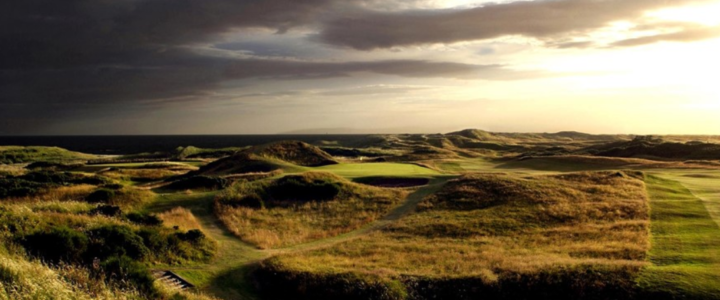
 Royal Troon is one of the greatest links courses in Scotland – founded in 1878 by a few enthusiasts, Troon Golf Club soon outgrew its purely local reputation. The Old Course today represents a stern golfing examination and in particular the inward half of Royal Troon is widely accepted as the most demanding of any Course on the Championship rota. It’s a challenging test of golfing ability with the wind and deep rough to contend with – with gorse and broom on each hole – where shot making is essential.
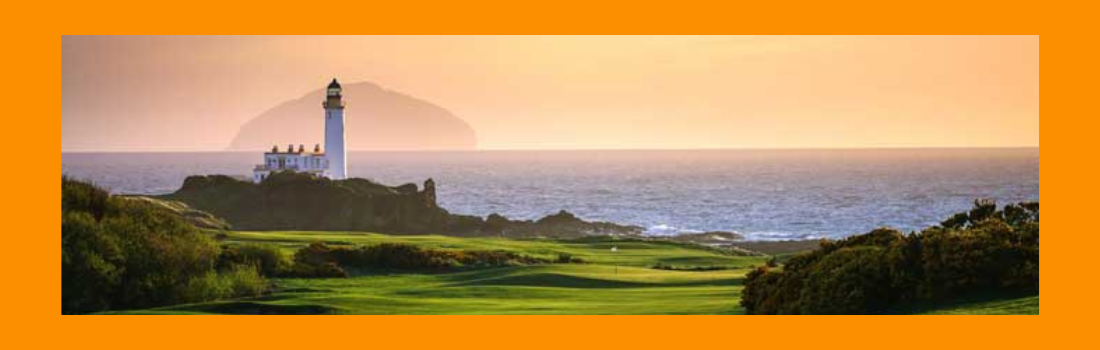
  From my (and many others) perspective the best hole on the course is the infamous Postage Stamp 8th – originally called “Ailsa” because there is a perfect view of the rocky islet of that name from the tee. The smallness of the putting surface accounted for the current name when William Park writing in “Golf Illustrated” said, ” A pitching surface skimmed down to the size of a Postage Stamp”. Much has been written about this 8th hole – the tee is on high ground and a dropping shot is played over a gully to a long but extremely narrow green set into the side of a large sandhill. Two bunkers protect the left side of the green while a large crater bunker shields the approach. Any mistake on the right will find one of the two deep bunkers with near vertical faces. There is no safe way to play this hole, the ball must find the green with the tee-shot. Depending on wind direction this 123 yard hole can play between a wedge and a 6 iron and can make or break anyone’s scorecard (including those of the top professionals!)
 The history of Prestwick Golf Club (sometimes referred to as ‘Old Prestwick’) stretches back over 160 years to a time when golf was in its infancy. In 1851, a group of 57 enthusiastic members, who met regularly at the Red Lion Inn, made the momentous decision to form a golf club purchasing two cottages opposite the tavern.
  The 1st hole – Railway – Par 4 – is one of the most famous opening holes in golf and sets the tone for the course, with an out-of-bounds wall running down the right-hand side from tee to green. You need to hit 160 yards to reach the fairway. Around 200 yards will leave a short iron to the green, favour the right side of the fairway for an easier second shot.
  The 5th hole – Himalayas – Par 3 – this is a world famous blind par three. It is crucial to aim at the disc on the hill that matches the tee you are playing from, and make sure you take enough club to match the distance. It is a testing shot especially as the prevailing winds will push you towards five bunkers on the left side of the green. The green slopes back to front, so leaving it short will give you an uphill putt.
  My favourite hole – the 17th – Alps – Par 4 – is a real treat – it’s the original 2nd hole from 1851 and the oldest existing hole in championship golf. The narrow fairway requires an accurate tee shot to allow the best chance of reaching the green in two. The blind second shot plays every inch of the yardage. Falling short will mean playing from the famous Sahara bunker. Check the tee box as this will indicate pin positions that you can then correspond to the markers on top of the Alps.